
Custom Foot Orthotics & Gait Assessment in Melrose Park
Understanding How Your Feet Influence the Way You Move
Your feet are the foundation of your body.
Every step you take places force through your feet before that force travels through your ankles, knees, hips and spine. When the feet aren't moving efficiently, other joints may have to compensate.
One of the most common things I hear is:
"I've been told I have flat feet, but no one has explained what that actually means."
Having flat feet does not automatically mean you need treatment.
Some people with flat feet have no pain at all, while others develop recurring foot, knee, hip or lower back problems because of the way their feet move during walking and running.
At Spine Chiropractic Melrose Park, I don't prescribe orthotics simply because someone has flat feet. Every recommendation is based on a comprehensive assessment of your foot function, walking pattern, symptoms and individual goals.
What Are Flat Feet?
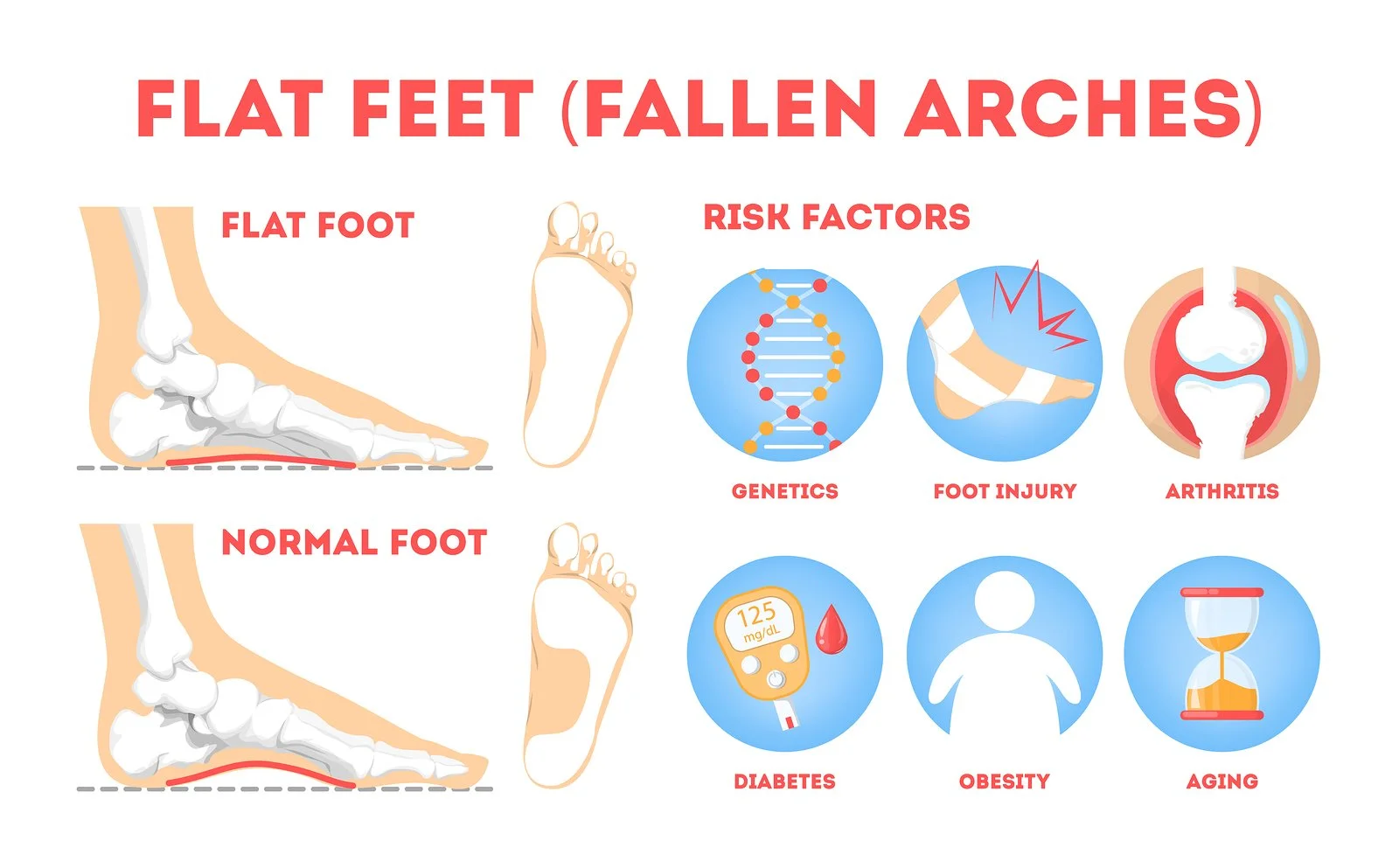
Flat feet (also known as pes planus) occur when the arch on the inside of the foot is lower than expected or collapses during weight-bearing.
Some people are born with flat feet, while others develop them over time.
Flat feet can be:
Flexible (the arch appears when sitting but flattens when standing)
Rigid (the arch remains flattened in all positions)
Many people with flat feet never experience pain. Others may develop symptoms if the foot is unable to manage everyday loads efficiently.
Common Symptoms
Depending on the individual, symptoms may include:
Foot pain
Heel pain
Arch pain
Tired feet
Ankle pain
Knee pain
Hip pain
Lower back pain
Shin splints
Plantar fasciitis
Achilles tendon pain
Frequent ankle sprains
Some people notice symptoms only after long periods of standing, while others experience discomfort during sport or exercise.
Why Do Foot Mechanics Matter?
Every time you walk, your feet help absorb shock and transfer forces through your body.
If the foot rolls inward excessively (overpronation), remains too rigid or doesn't move efficiently, the forces travelling through your legs may change.
For some individuals, this may contribute to increased stress on:
The ankles
The knees
The hips
The pelvis
The lower back
Foot mechanics are only one part of the picture, which is why we always assess the entire lower limb rather than focusing on the feet alone.
Our Digital Gait Assessment
At Spine Chiropractic Melrose Park, we use digital gait assessment technology to better understand how your feet function during standing and walking.
This assessment provides valuable information about:
Weight distribution
Foot posture
Pressure patterns
Walking mechanics
Balance
Arch function
Left-to-right symmetry
Combined with your clinical examination, this helps us understand whether altered foot biomechanics may be contributing to your symptoms.
A gait scan is not used in isolation—it forms one part of a comprehensive assessment.
What Are Custom Foot Orthotics?
Custom orthotics are individually designed shoe inserts that aim to support and optimise foot mechanics where clinically appropriate.
Unlike generic over-the-counter insoles, custom orthotics are prescribed based on your:
Foot shape
Gait assessment
Medical history
Activity level
Symptoms
Lifestyle
Not everyone requires orthotics, and they are only recommended when they are likely to provide meaningful benefit as part of an overall management plan.
Who May Benefit from Orthotics?
Depending on your assessment findings, orthotics may be considered for people experiencing:
Flat feet
Overpronation
Plantar fasciitis
Heel pain
Recurrent ankle sprains
Shin splints
Knee pain
Hip pain
Lower back pain
Sports injuries
Occupational standing for long hours
The decision to prescribe orthotics is always individualised.
Why We Don't Treat the Foot Alone
One of the most common misconceptions is that every foot problem can be solved with an orthotic.
In reality, the foot is only one part of the movement system.
A person with knee pain may also have:
Weak hip muscles
Limited ankle mobility
Reduced balance
Poor movement control
Previous injuries
That's why your assessment also considers your posture, walking pattern, strength and flexibility.
Sometimes orthotics are appropriate.
Sometimes exercises are enough.
Often, the best results come from combining both.
Evidence-Based Management
Depending on your assessment, your management plan may include:
Custom foot orthotics where clinically appropriate
Chiropractic care
Diversified & Activator Methods®
Foot and ankle mobilisation
Strengthening exercises
Balance training
Walking retraining
Running advice
Footwear recommendations
Rehabilitation exercises
Our aim is to improve the way your body moves—not simply provide an insole.
From Dr Nasim
One of the things I enjoy most about assessing feet is showing patients how movement in one part of the body can influence another.
Many people come in expecting me to look only at their feet, but we're actually assessing how your entire body works together.
I've seen patients whose knee pain improved after addressing foot mechanics, while others discovered that strengthening their hips and improving ankle mobility was more important than wearing orthotics.
That's why I don't believe in prescribing orthotics for everyone.
I believe in finding the right solution for the right patient.
Whether that involves exercises, footwear advice, chiropractic care or custom orthotics, my goal is always to help you move more comfortably and confidently.
Home Advice
Depending on your assessment, recommendations may include:
Wearing supportive footwear
Gradually increasing activity
Foot strengthening exercises
Balance exercises
Calf stretching
Hip strengthening
Walking programmes
Using prescribed orthotics consistently if recommended
When Should You Seek Assessment?
You should consider an assessment if you experience:
Persistent foot pain
Frequent ankle sprains
Heel pain
Knee pain that keeps returning
Pain while running
Uneven shoe wear
Difficulty standing for long periods
Foot fatigue affecting everyday activities
Myth vs Fact
❌ Myth
Everyone with flat feet needs orthotics.
✅ Fact
Many people with flat feet have no symptoms and function well without orthotics. Orthotics should be prescribed only when they are clinically appropriate and based on a comprehensive assessment.
Did You Know?
Your feet contain 26 bones, 33 joints and more than 100 muscles, tendons and ligaments, making them one of the most complex structures in the body. Even small changes in foot mechanics can influence how forces travel through the ankles, knees, hips and spine.
Frequently Asked Questions
Do I need orthotics if I have flat feet?
Not necessarily. Many people with flat feet have no pain or movement problems. Whether orthotics are appropriate depends on your symptoms, examination findings and gait assessment.
How is a gait scan performed?
A gait scan uses specialised technology to assess pressure distribution, balance and walking mechanics. It is painless and forms part of your comprehensive clinical assessment.
Can orthotics help knee or back pain?
For some people with altered foot biomechanics, custom orthotics may help reduce stress on the lower limbs and spine as part of an overall management plan. They are not appropriate for every case.
Will I have to wear orthotics forever?
Not always. Some people benefit from long-term use, while others may gradually reduce their reliance on orthotics as strength, movement and function improve.
Can children benefit from a foot assessment?
Children who experience persistent foot pain, frequent tripping or walking difficulties may benefit from an assessment. Management is always individualised, and not every child with flat feet requires treatment.
Why Choose Spine Chiropractic Melrose Park?
At Spine Chiropractic Melrose Park, we don't just look at your feet—we assess how your entire body moves.
Dr Nasim Vesalpour combines over 16 years of clinical experience with digital gait assessment, rehabilitation and evidence-based chiropractic care to identify the factors contributing to your symptoms.
Our approach includes:
✔ Comprehensive gait assessment
✔ Digital foot pressure analysis
✔ Custom foot orthotics where clinically appropriate
✔ Chiropractic care
✔ Rehabilitation and exercise prescription
✔ Sports injury assessment
✔ Running and walking analysis
✔ Collaboration with GPs, podiatrists and other healthcare professionals when appropriate
Related Conditions
You may also be interested in:
Knee Pain
Ankle Pain
Sports Injuries
Plantar Fasciitis (future page)
Lower Back Pain
Joint Pain
Postural Problems
Book an Appointment
Whether you're experiencing foot pain, recurring sports injuries or wondering if custom orthotics are right for you, we'd love to help.
Book an appointment with Dr Nasim Vesalpour at Spine Chiropractic Melrose Park for a comprehensive foot and gait assessment. Together, we'll identify the factors affecting your movement and develop a personalised, evidence-based plan to help you move with greater comfort and confidence.